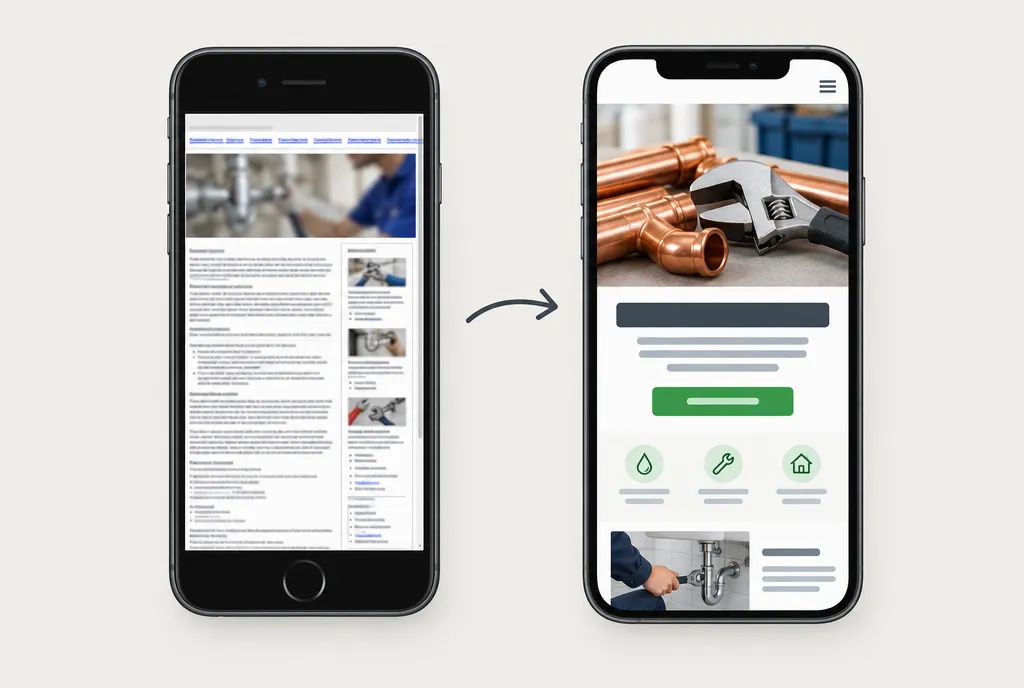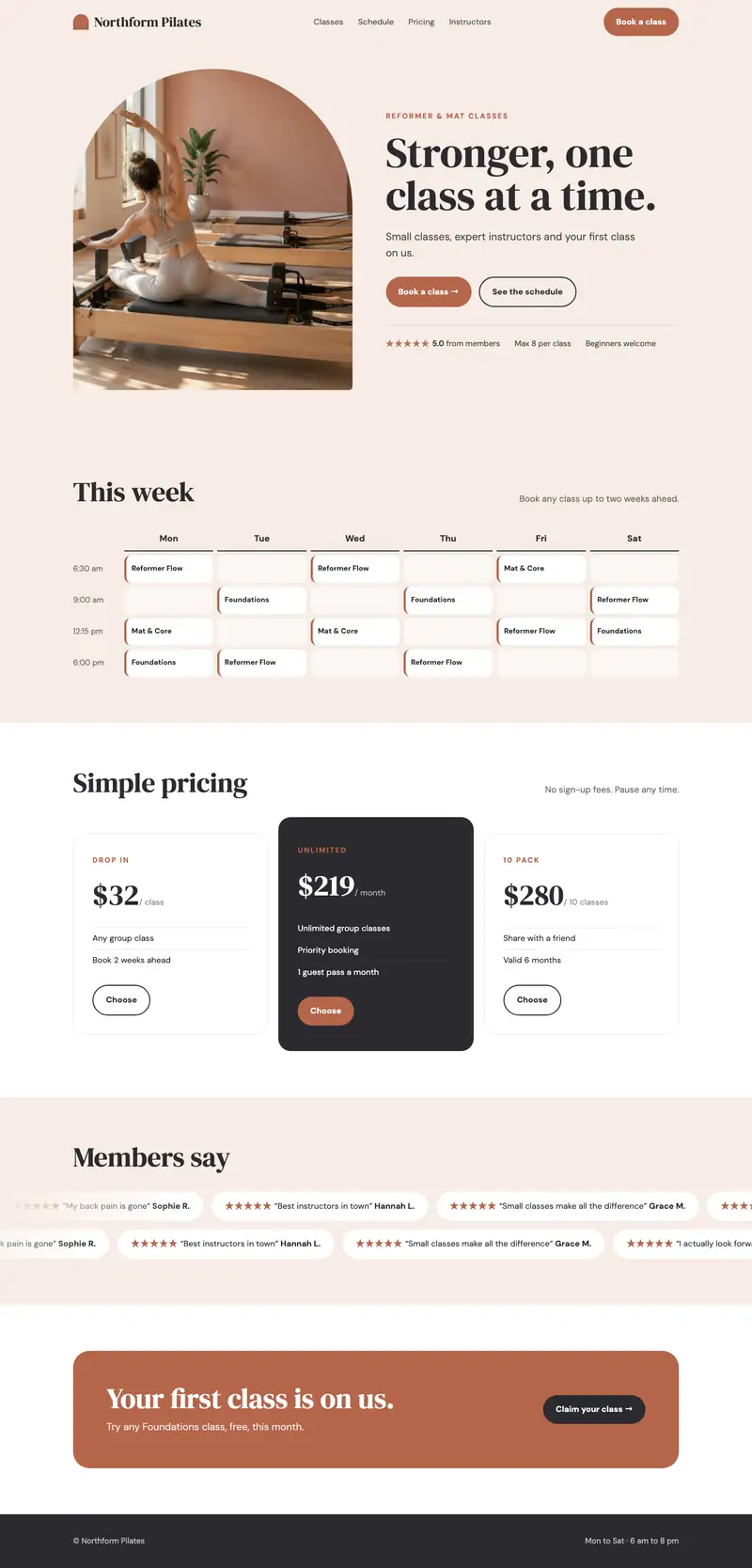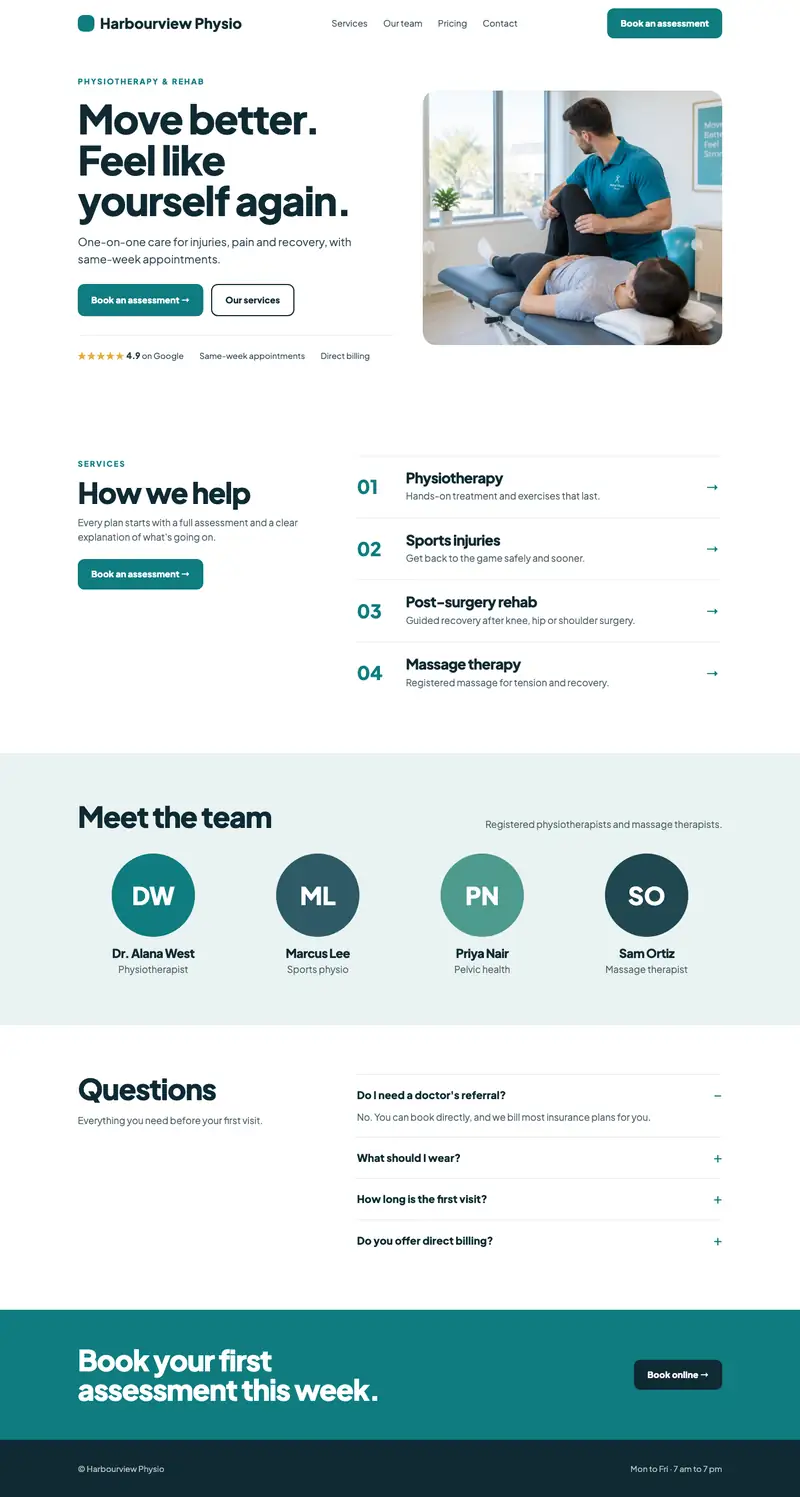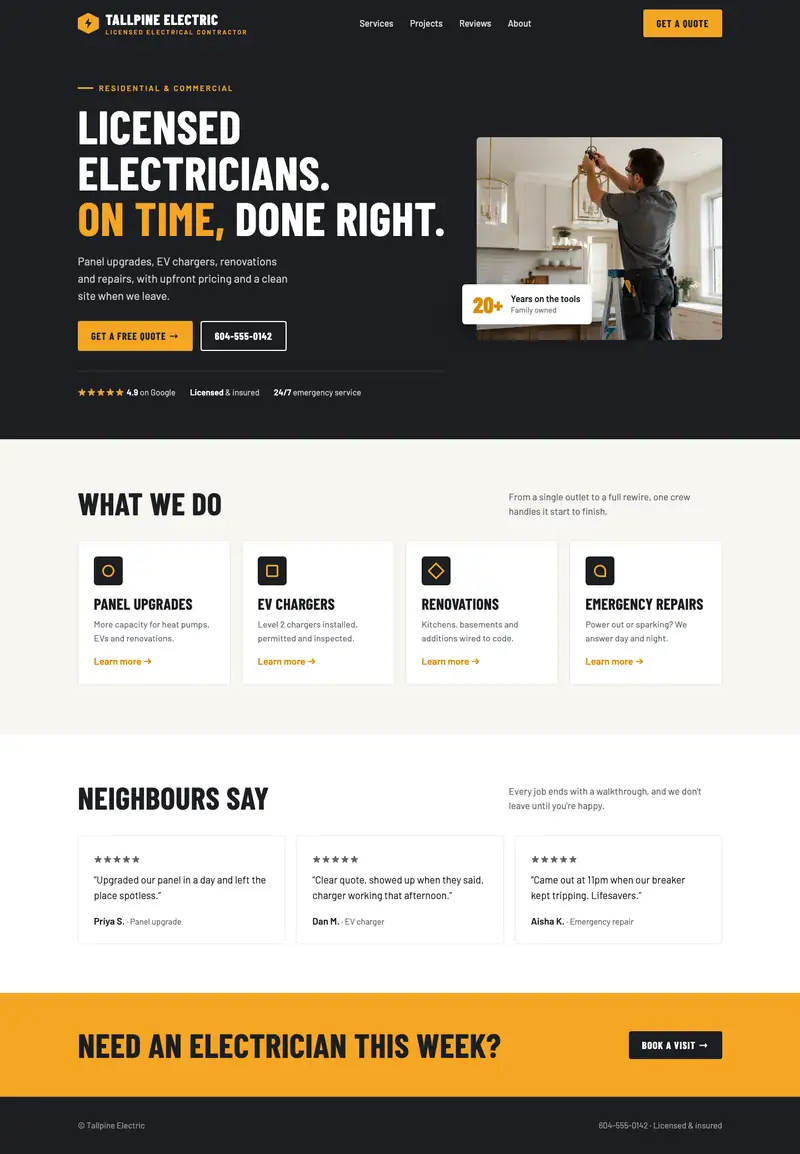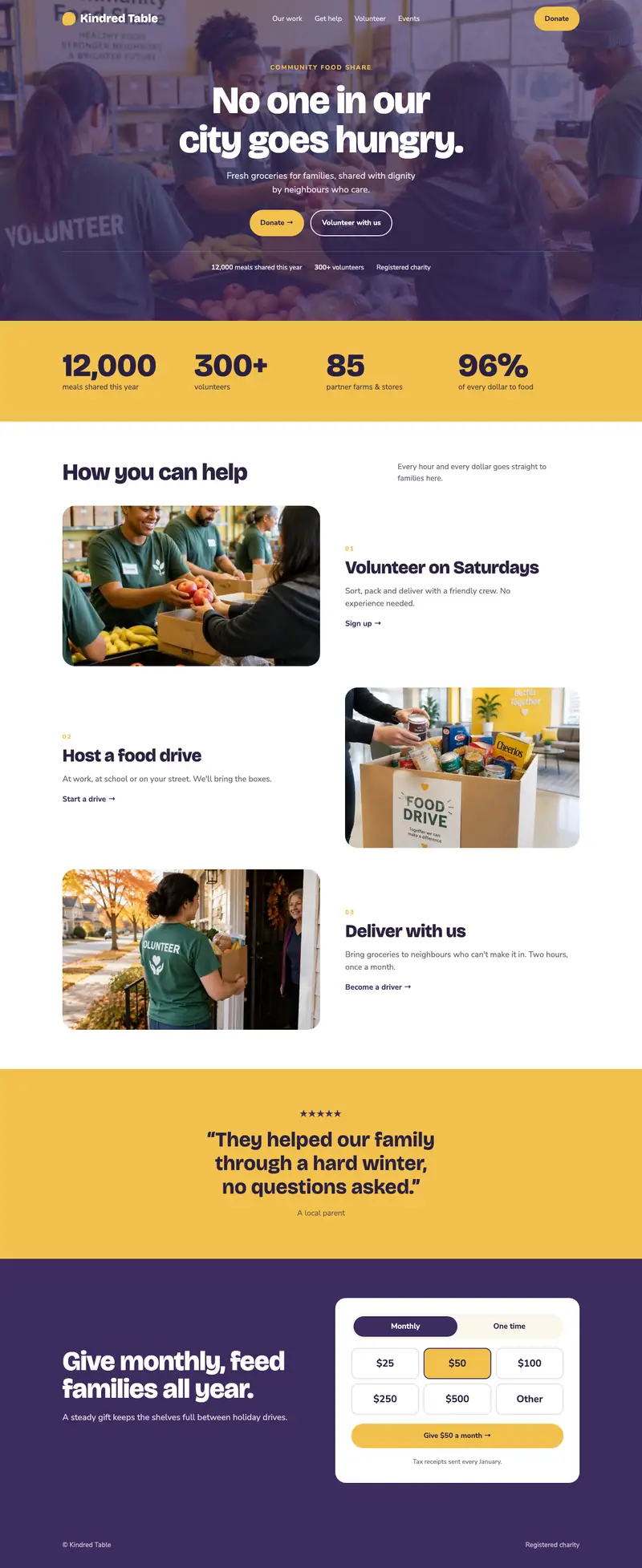
Website builders have made it possible for almost anyone to put a site online. For some businesses, that’s all they need. For others, it holds them back.
Here’s how to tell which one you are.
When a DIY builder makes sense
- You’re just starting out and need something online quickly.
- Your budget is tight and the site’s main job is to show you exist.
- You have the time to learn the tool, write the words and keep it up to date.
- Your needs are simple. A few pages, your contact details and not much else.
If that sounds like you, a builder is a good choice. Our free course shows you how to do it well, step by step.
When a custom site is worth it
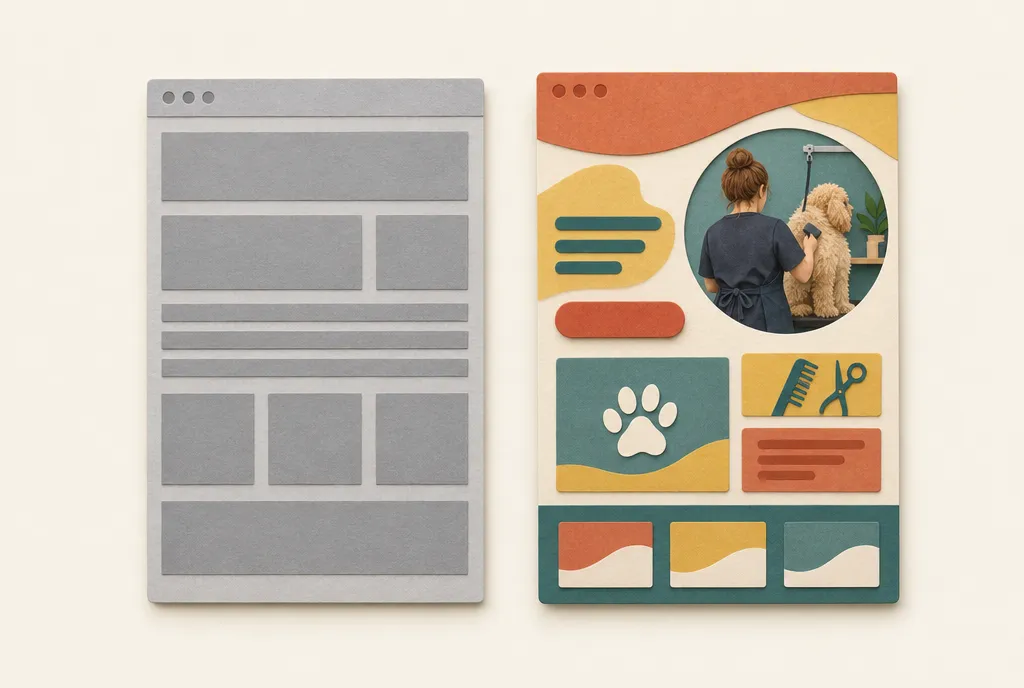
- You need to stand out. Templates are shared by thousands of sites, so many look alike.
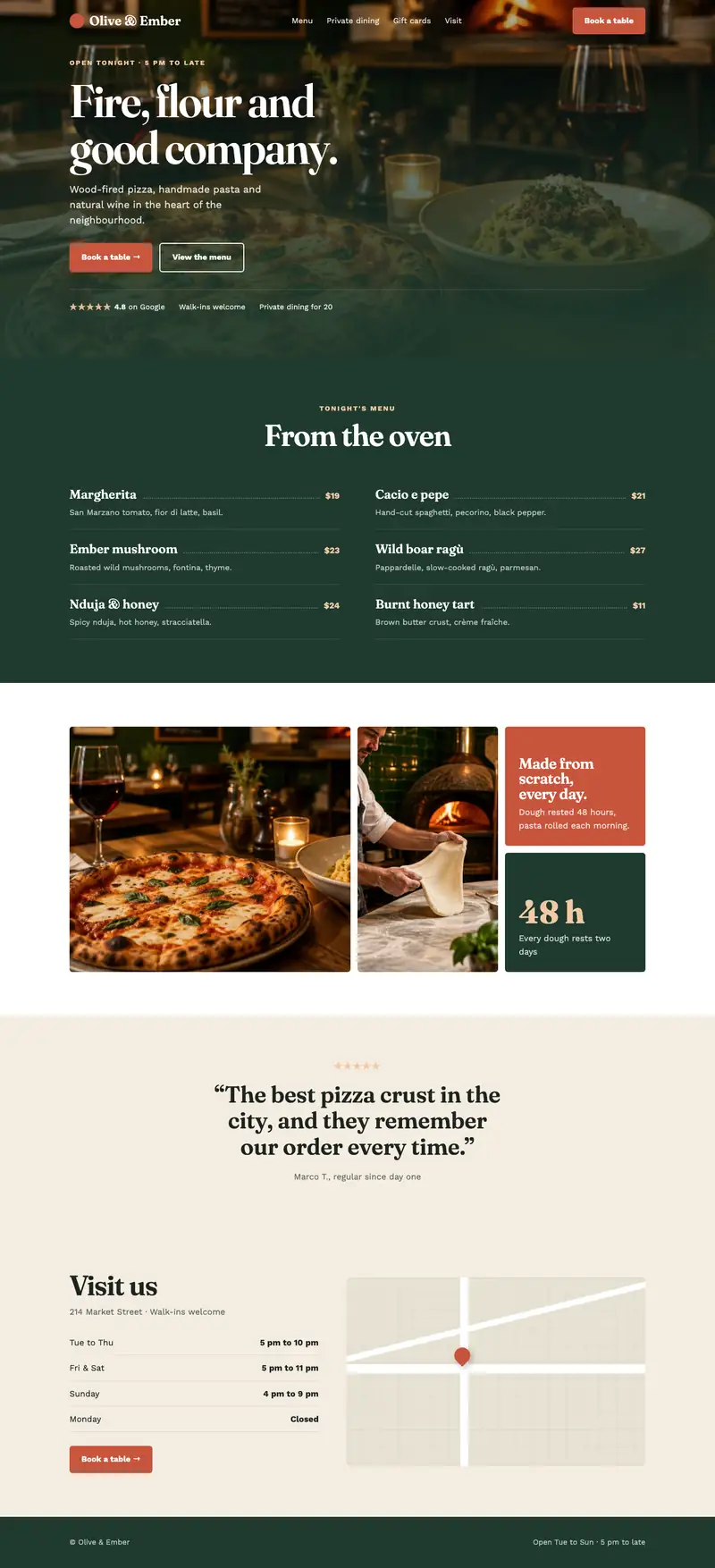
- Your website has to bring in work. A site planned around your customers and your market turns more visitors into calls and bookings.
- You don’t have the time. Building, writing and updating a site takes hours most business owners don’t have.
- You’ve outgrown your current site. It’s slow, hard to change or doesn’t show up on Google.
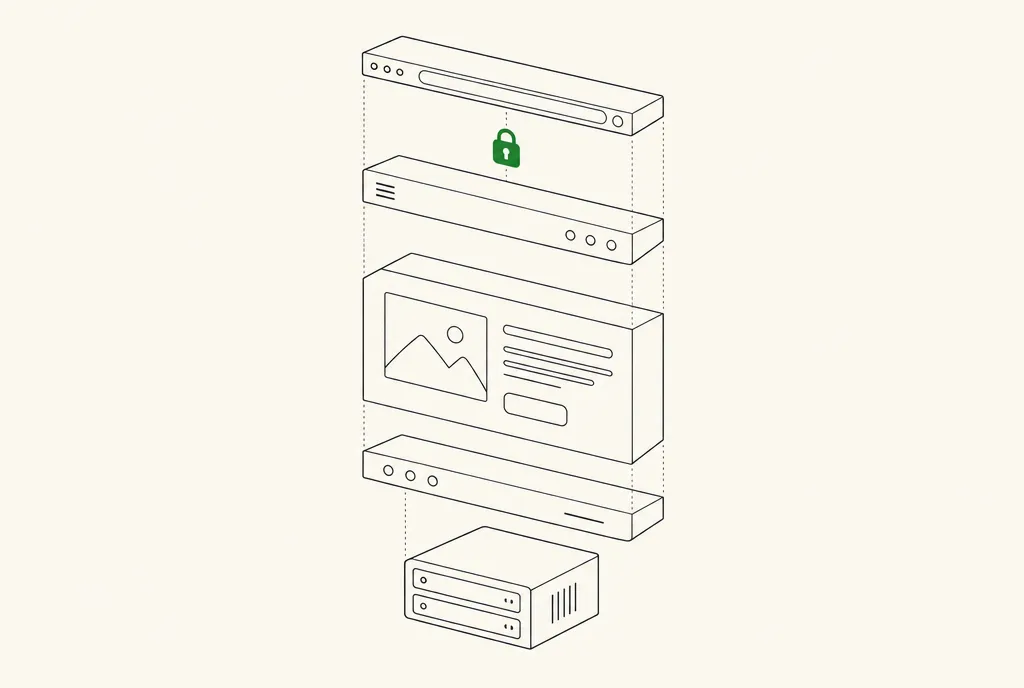
- You want it looked after. Security, backups and updates handled for you, so you don’t have to think about it.
The trade-offs
DIY builder
- Lower cost up front
- A monthly subscription that keeps going
- You do the work, from design to updates
- Limited by what the tool and its templates allow
- Moving to another platform later can be hard
Custom site
- A bigger investment at the start
- Designed and written for your business
- Built to be fast and found on Google and AI tools
- Someone to call when you need a change
- Yours to keep, with your domain in your name
A few questions to ask yourself
- What should your website do for your business? Show you exist, or bring in new work?
- How many hours can you spend on it each month?
- How do you want to look next to your competitors?
- What happens if something breaks on a Friday afternoon?
If your answers lean toward “bring in work”, “not many” and “better than them”, a custom site will likely pay for itself.
Not sure yet?
Start with the free course. You’ll learn what goes into a good site either way, and you’ll know what to ask for when you’re ready. Or answer a few quick questions and we’ll tell you honestly which route makes sense for you.